When young people come to the attention of the police, they’re often in a difficult emotional state. For many, dealing with officers and staff for the first time can be traumatising.
For others, when it’s not their first time being arrested, or interacting with us, they’re able to detach themselves from the process.
Both create a barrier to engagement.
Understanding how we can work together to respond to these people can have a significant impact on their behaviour and, in turn, help to stop them from committing future crime.
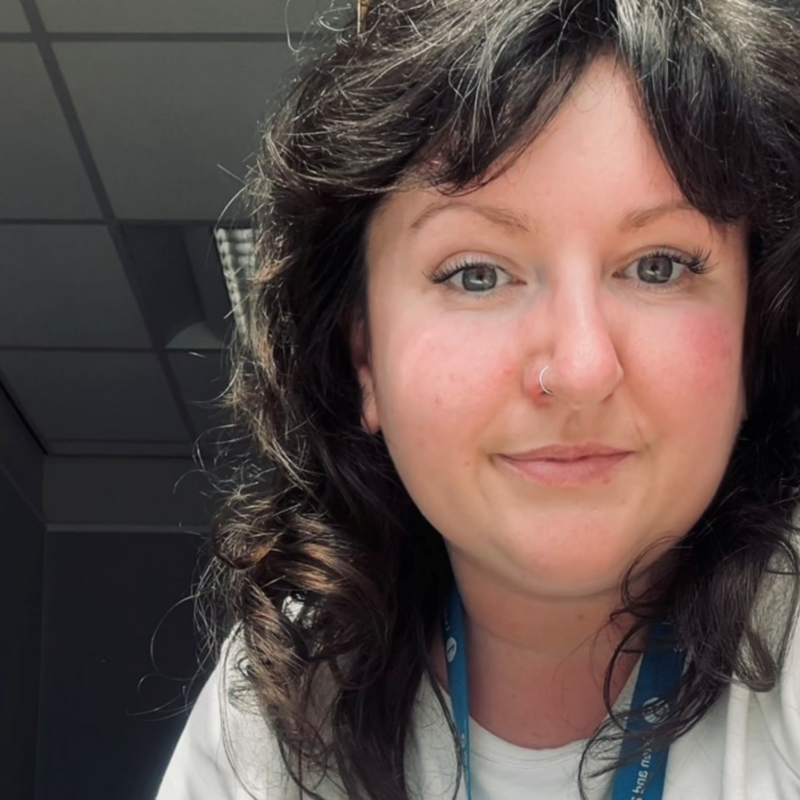
As part of our Ditch the Blade campaign, we spoke to Violence Reduction Team (VRT) Clinical Associate in Psychology/Mental Health Practitioner, Lauren Cockroft, who is helping young people in Staffordshire access the right support to prevent them from being involved in crime.
“We’ve known for years that they [young people] get involved with non-standard teenage activity, including carrying a knife, for a reason,” she says. “This could include layers of trauma, disadvantage, poverty or more.
“These things go untreated as usually communities don’t know how to respond to these experiences, or don’t see the explicit impact of them on young people.”
Lauren provides a safe space for them.
She’s on hand to validate and listen to what they may be thinking and feeling, as part of VRT Wellness, a project funded by the Staffordshire and Stoke-on-Trent Violence Reduction Alliance (VRA) and established in partnership with Staffordshire Police and Midlands Partnership University NHS Foundation Trust (MPFT).
She supports police officers and staff by helping to ensure young people involved in, or at risk of becoming drawn into, crime and violence in Staffordshire get the mental health support they need.
“The main aim of the project is to improve opportunity and access to mental health support for young people on the VRT caseload,” she says. “The majority have some level of trauma, which can include things that have happened to them in their earlier life as well as their experiences of exploitation or peer-related violence.
“Often people don’t even recognise some of the things they experience as being related to their mental wellbeing, so don’t access the right services until it’s quite far down the line in terms of distress and impact on their lives.
“They need mental health support that’s accessible for them and doesn’t judge or take a moral stance on what has happened, or what they’re doing in response to what is going on in their lives.”
Lauren finds the preventative side of her role particularly rewarding, working with young people, and tapping into their potential.
A recent example that stands out is working with a young person who came to police attention after they expressed thoughts of seriously harming others.
Lauren was able to complete work with the young person focusing on their worries and triggers, helping them to understand how their fears made them anxious and caused unsettling emotions to surface as frustration and anger.
Alongside this Lauren was able to complete some work with the adults around them to ensure that a systemic change in the support the young person received took place, helping the young person to feel reassured and safe to respond differently to their worries.
“Young people often feel misunderstood so it’s important we identify areas of concern in a way that resonates for them that may require further assessment or support. The key is trying to understand what they may actually be communicating through their behaviour.
“Then we can begin to understand and develop an insight into their feelings, helping them to overcome their difficulties and prevent issues in the future.”
During the last 18 months, Lauren has received 136 referrals from VRT police officers, with 32 of these resulting in direct work or intervention by her.
Part of her work involves working with partners in schools and services to identify vulnerable people early on, meaning that interventions can be put in place to support them before the risk of offending escalates.
Jane Pulfer, Head of MPFT’s Health and Justice services, which manages the VRT Wellness project, said:
“We are committed to working with our partners in new and innovative ways to ensure those who need, and can benefit from our services are able to access the best possible support.
“The VRT Wellness project is a fantastic example of this. The specialist work being led by Lauren in partnership with Staffordshire Police is having a huge impact on the lives of young people involved in, or at risk of becoming drawn into crime and violence. This proactive community-based prevention work also supports the key ambitions of the NHS 10 Year Plan.”
Staffordshire Police, Fire & Rescue and Crime Commissioner, Ben Adams, who is chair of the VRA said:
“The VRA aims to address the root causes of violence. For young people, a common cause of why they may be affected by violence is mental health.
“Through the VRT Wellness project, young people can access support they may not be able to receive elsewhere. This support can be life changing for a young person involved in violence because of their mental health.
“From March this year, the VRA has been able to provide further funding to allow Staffordshire Police and MPFT to expand the project, meaning more young people will be able to access the support they need.”
Ditch the Blade runs until Sunday May 31.
Keep up to date with activity, information and advice by visiting: https://www.staffordshire.police.uk/police-forces/staffordshire-police/areas/staffordshire-police/campaigns/2021/ditchtheblade/
